
Title: Warm Technology: Well-being Tech That Enhances Resilience
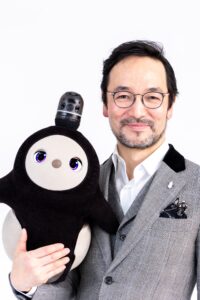
・Speaker: Kaname Hayashi
・Affiliation: GROOVE X, Inc.
・Position: President & CEO
Abstract
As technology continues to advance at a rapid pace, the relationship between humans and robots is entering a new stage.
LOVOT, the family-oriented robot developed by GROOVE X, is designed not merely to pursue efficiency or convenience, but to exist alongside people as a companion that brings emotional richness and well-being.
In this talk, founder and CEO Kaname Hayashi will share the philosophy of “technology that expands human happiness,” a vision he arrived at through his experience working on automotive and robotics projects. Through the理念 behind the birth of LOVOT, he will discuss new forms of human–robot relationships in future society, as well as new approaches to value creation required in an era where emotions and empathy are increasingly important.
Bio
Kaname Hayashi was born in Aichi Prefecture, Japan, in 1973. He joined Toyota Motor Corporation in 1998, where he worked on aerodynamic development for the supercar LFA and Formula One vehicles, and later served as a manager in mass-production vehicle development.
In 2012, he joined SoftBank and became involved in the Pepper robot project. In 2015, he founded GROOVE X, Inc. In December 2018, the company unveiled the family-oriented robot LOVOT, which entered commercial release in 2019.
LOVOT has received numerous awards, including the CES 2020 Innovation Award, Refinery29’s Best of CES, the Good Design Gold Award, and the WELLBEING AWARDS Gold Impact Award in the Products & Services category.
His publications include Warm Technology: Stories of the Future (published in May 2023), among others.
Title: Toward human-like dexterity for robots and beyond
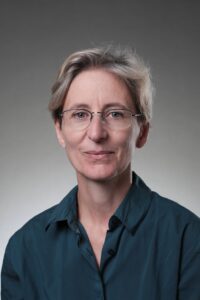
・Speaker: Aude Billard
・Affiliation: EPFL, Switzerland
・Position: Professor
Abstract
Our homes, offices and urban surroundings are carefully built to be inhabited by us, humans. Tools and furniture are designed to be easily manipulated by the human hand. Floors and stairs are modeled for human-sized legs. For robots to work seamlessly in our environments they should have bodies that resemble in shape, size and strength to the human body, and use these with the same dexterity and reactivity. This talk will provide an overview of techniques developed at LASA to enable robust, fast and flexible manipulation. Learning is guided by human demonstrations. Robust manipulation is achieved through sampling over distributions of feasible grasps. Smooth exploration leverages on complete tactile sensing coverage and learned variable impedance strategies. Bi-manual coordination offers ways to exploit the entire robot’s workspace. Imprecise positioning and sensing is overcome using active compliant strategies, similar to that displayed by humans when facing situations with high uncertainty. The talk will conclude with examples in which robots achieve super-human capabilities for catching fast moving objects with a dexterity that exceeds that displayed by human beings.
Bio
Aude Billard is full professor and the director of the LASA laboratory at the School of Engineering at the Swiss Institute of Technology Lausanne (EPFL). Prof Billard currently serves as the junior past President of the IEEE Robotics and Automation Society, director of the ELLIS Robot Learning Program and co-director of the Robot Learning Foundation, a non-profit corporation that serves as the governing body behind the Conference on Robot Learning (CoRL), vice-president of the Swiss Robotics Association. Prof Billard holds a BSc and MSc in Physics from EPFL and a PhD in Artificial Intelligence from the University of Edinburgh. Prof Billard is an IEEE Fellow and the recipient of numerous recognitions, among which the Intel Corporation Teaching award, the Swiss National Science Foundation career award, the Outstanding Young Person in Science and Innovation from the Swiss Chamber of Commerce, the IEEE RAS Distinguished Award, and the IEEE-RAS Best Reviewer Award. Dr. Billard was a plenary speaker at major robotics, AI and Control conferences (ICRA, AAAI, CoRL, HRI, CASE, ICDL, ECML, L4DC, IFAC Symposium, ROMAN, Humanoids and many others) and acted on various positions on the organization committee of numerous International Conferences in Robotics. Her research spans the fields of machine learning and robotics with a particular emphasis on fast and reactive control and on safe human-robot interaction. This research received numerous best conference paper awards, as well as the prestigious King-Sun Fu Memorial Award for the best IEEE Transaction in Robotics paper, and is regularly featured in premier venues (BBC, IEEE Spectrum, Wired).
Title: Adaptive Human–Robot Collaboration: Personalization and Multi‑Agent Teaming
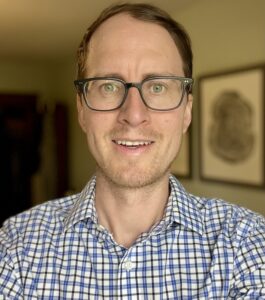
・Speaker: Stephen L. Smith
・Affiliation: University of Waterloo, CANADA
・Position: Professor
Abstract
Effective human–robot collaboration requires robots that adapt online to their human partners throughout the interaction. A central aspect of this adaptation is personalization: robots must account for human role preferences, collaboration styles, task performance, and availability.
I will first present adaptive collaboration methods in which robots infer latent human variables online, specifically role preference (lead/follow) and task performance, from indirect observations. By using these estimates to proactively adjust initiative and task allocation, the robot can better align with the human’s intent. Results from collaborative assembly user studies show that this leader-follower adaptability improves both team efficiency and perceived teammate quality.
I will then address multi‑agent teaming, introducing coordination mechanisms and attention scheduling strategies for human supervision of robot fleets. I will show how robots adapt plans to dynamic supervisor availability, and how allocating supervisor attention can be cast as a restless multi‑armed bandit (RMAB) problem. Together, these results motivate personalization as a foundation for human‑centered teaming and demonstrate scalability to complex multi‑agent systems.
Bio
Stephen L. Smith is a Professor in the Department of Electrical and Computer Engineering at the University of Waterloo, Canada, where he holds a Canada Research Chair in Autonomous Systems. He co-directs the Waterloo Data & Artificial Intelligence Institute and leads the Autonomous Systems Lab. Prior to joining Waterloo, he was a postdoctoral researcher at MIT’s Computer Science and Artificial Intelligence Laboratory (CSAIL). He holds degrees from Queen’s University, the University of Toronto, and UC Santa Barbara. Prof. Smith is a licensed Professional Engineer and has advised several startups in transportation and robotics. He has served on editorial boards and organizing committees for major IEEE journals and conferences, including IEEE Transactions on Robotics, ACC, RO-MAN, and MTNS. His honours include the Ontario Early Researcher Award, an NSERC Discovery Accelerator Supplement, and multiple Outstanding Performance Awards from Waterloo. His research focuses on control and optimization for autonomous systems, with emphasis on safe motion planning and human‑autonomy interaction.